Tags
Ecommerce · UX/UI · CRO · PDP · A/B Testing · Product Strategy
Client
Tropicfeel
Backpack PDP Redesign (+16% ATC)
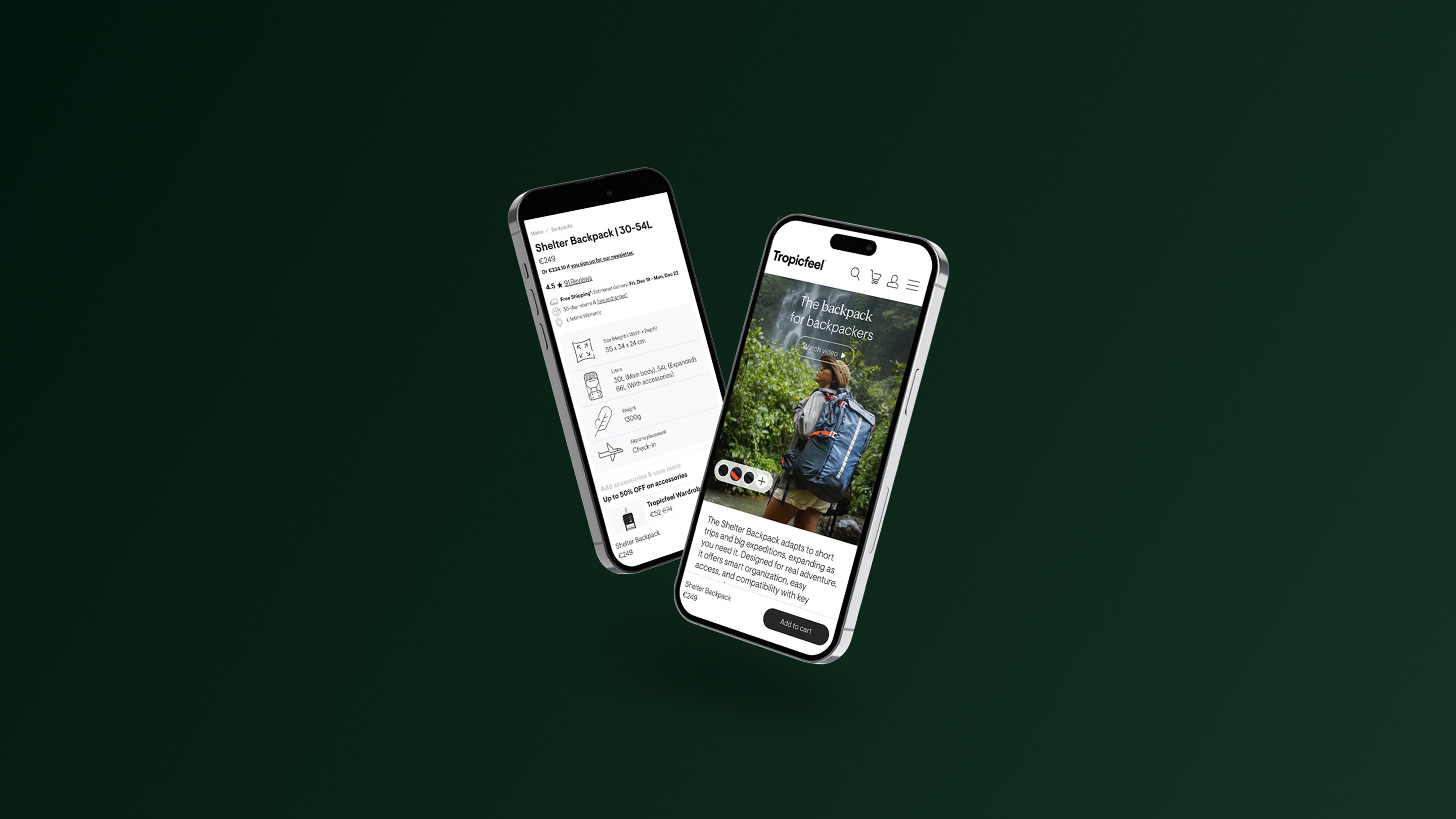
Redesigned the backpack shopping flow to reduce hesitation and make the value obvious—validated with an A/B test.
+16% ATC (+0.92pp) · +5% CvR · +2.26€ AOV
At Tropicfeel we review our main ecommerce KPIs by category every week. In Backpacks we started to see a strange pattern: conversion rate looked stable, but only because we were increasing discount levels, while Add to Cart was going down. To understand what was happening, I went beyond the numbers:
Analysed recordings and heatmaps.
Ran user interviews.
Spoke with Customer Experience about recurring complaints and questions.
Everything pointed to the same root cause: our legacy Kickstarter-style experience —highly immersive, with a separate rewards/packs step and special discounts— was starting to work against us. Most users were no longer hardcore fans of this model and needed a clearer, more conventional shopping experience, aligned with what they see in other ecommerce sites.
Backpacks is a strategic category, and a big part of its value comes from the accessory ecosystem: around 80% of orders include at least one accessory.
Goal
Increase Add to Cart for the Backpacks category.
Improve conversion rate without relying so heavily on discounts.
Keep the Tropicfeel DNA (storytelling, modular ecosystem) inside a more familiar ecommerce pattern.
Design a flow where we secure the backpack sale first, then help users complement with accessories.
Role and scope
As Senior Product Designer & UX/UI Manager I:
Led quantitative and qualitative analysis.
Defined hypotheses and KPIs together with data/growth.
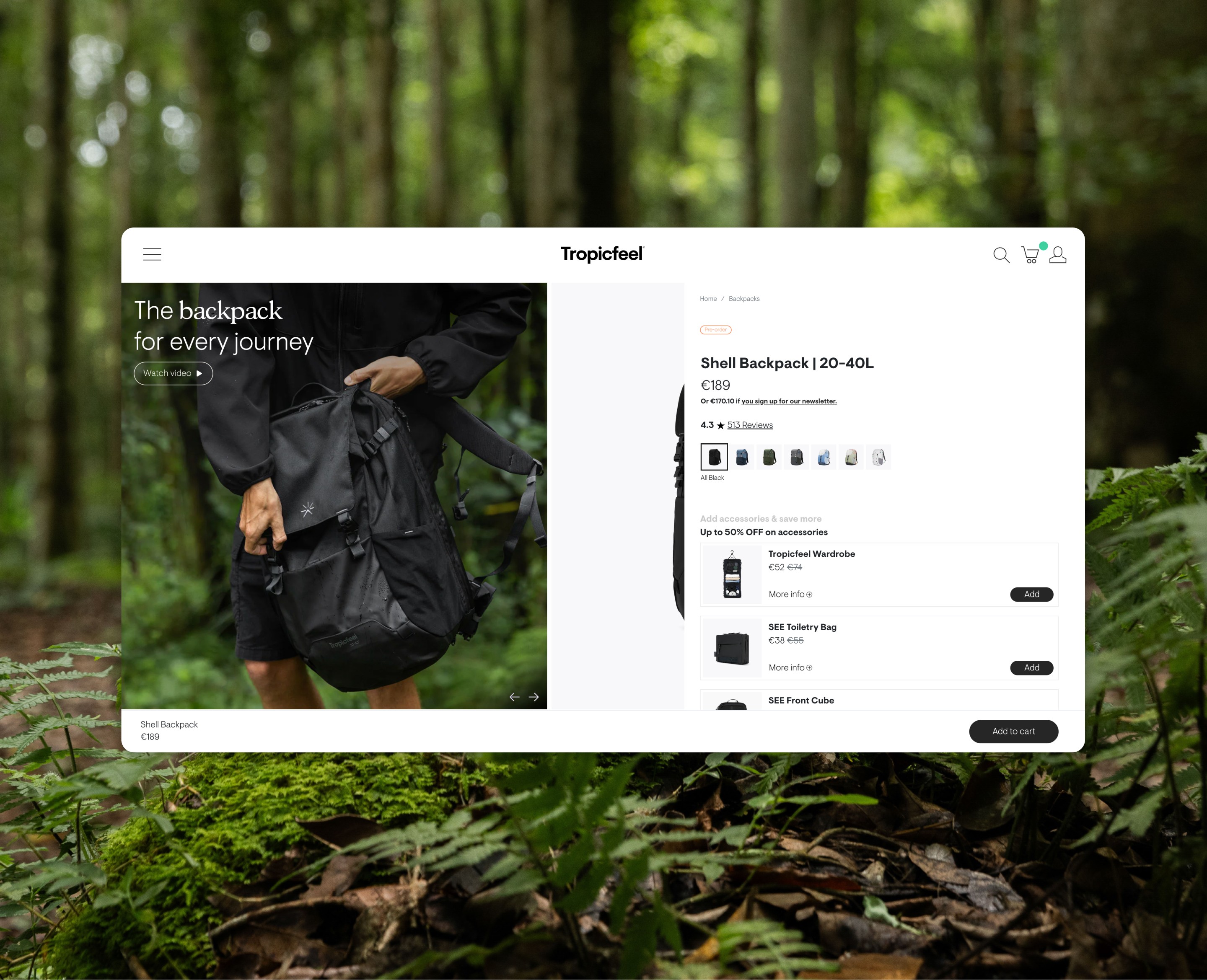
Redesigned the Backpacks PDP / immersive experience.
Designed the new cross-selling experience in the cart.
Collaborated closely with ecommerce, growth, acquisition, CX and dev teams.
Strategy & solution
From Kickstarter-style flow to a 1-click PDP
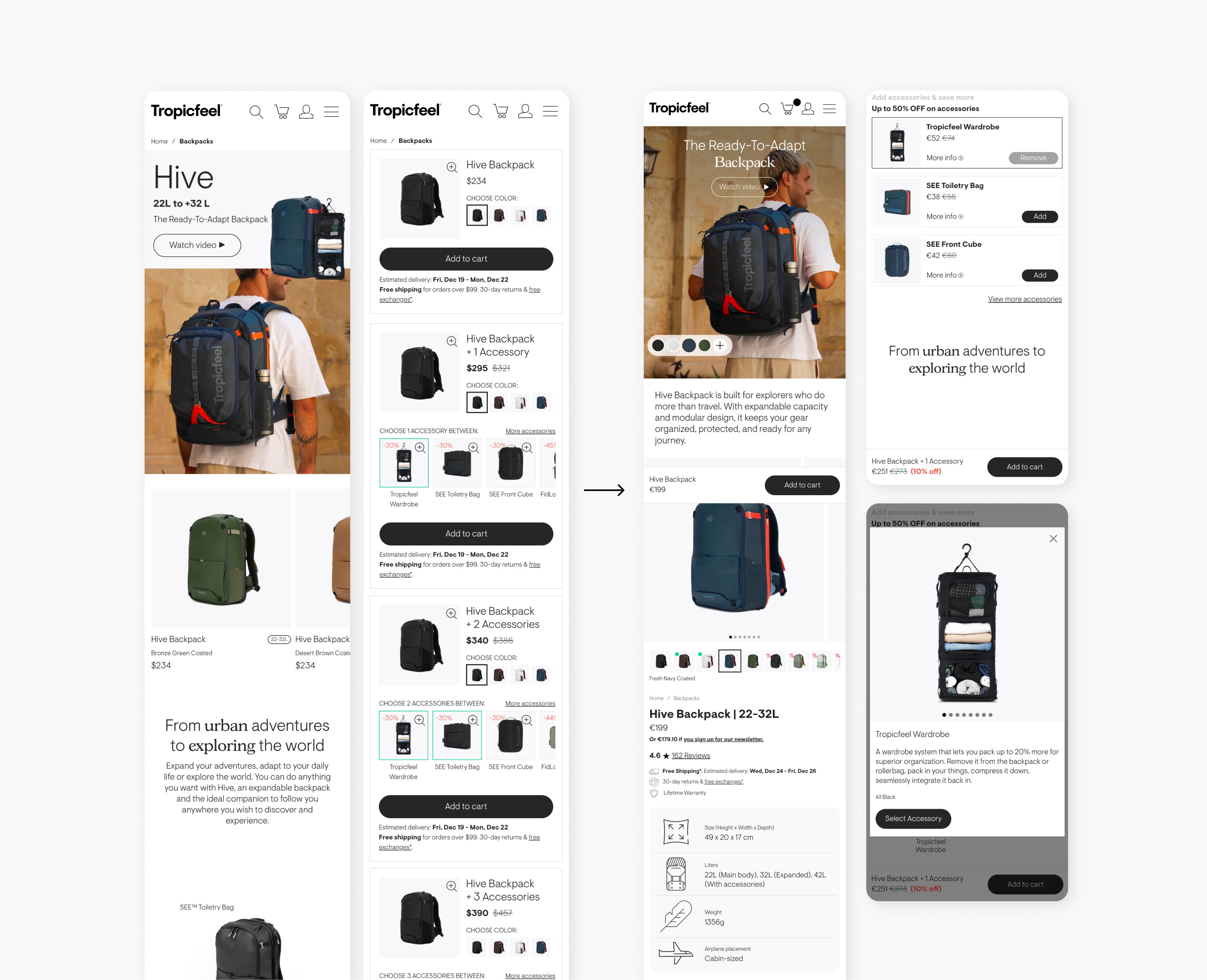
We moved from a 2-step flow (immersive page + rewards/packs) to a 1-click PDP/immersive experience, where users can configure and buy in a single step.
Designing the first scroll as the key decision moment
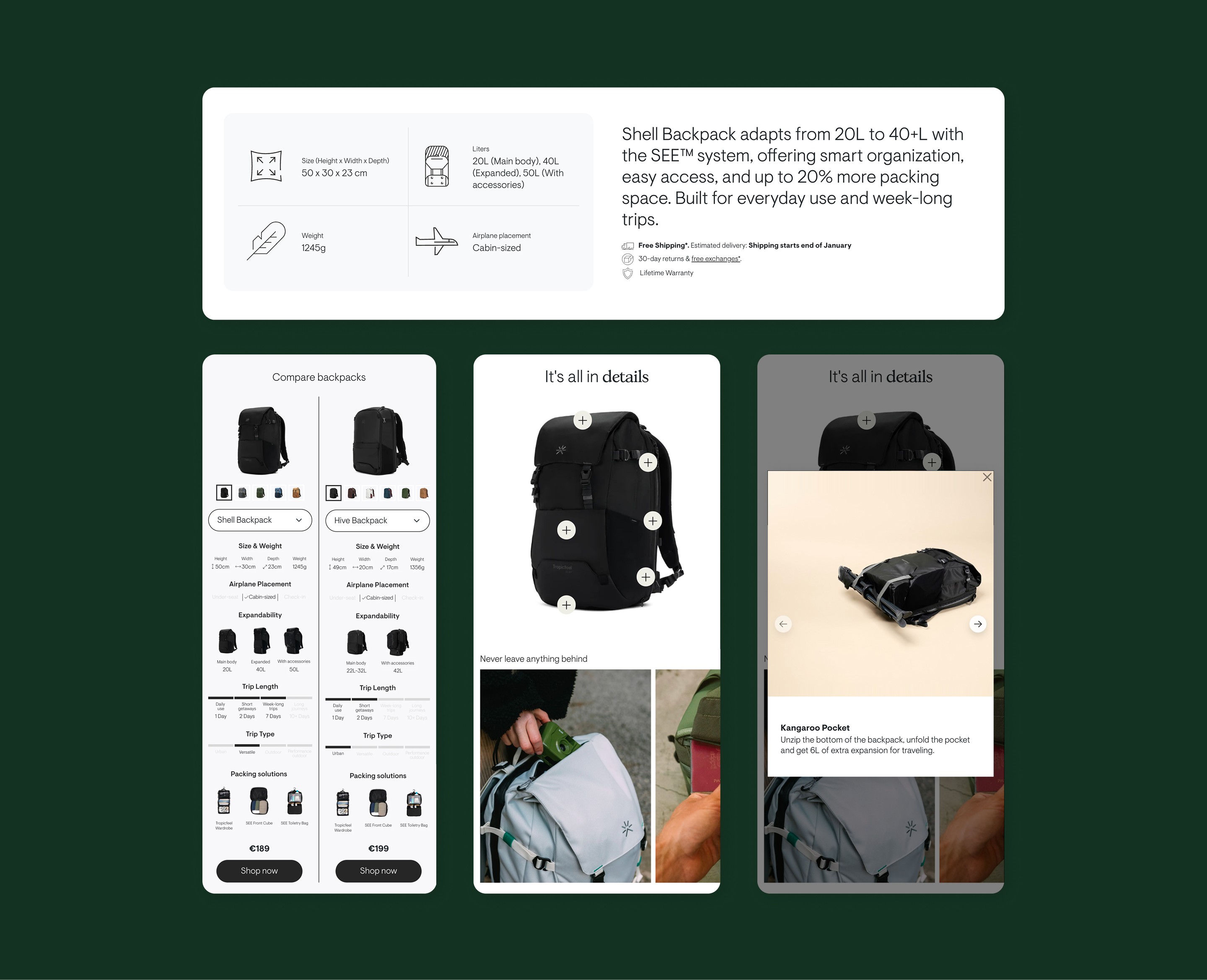
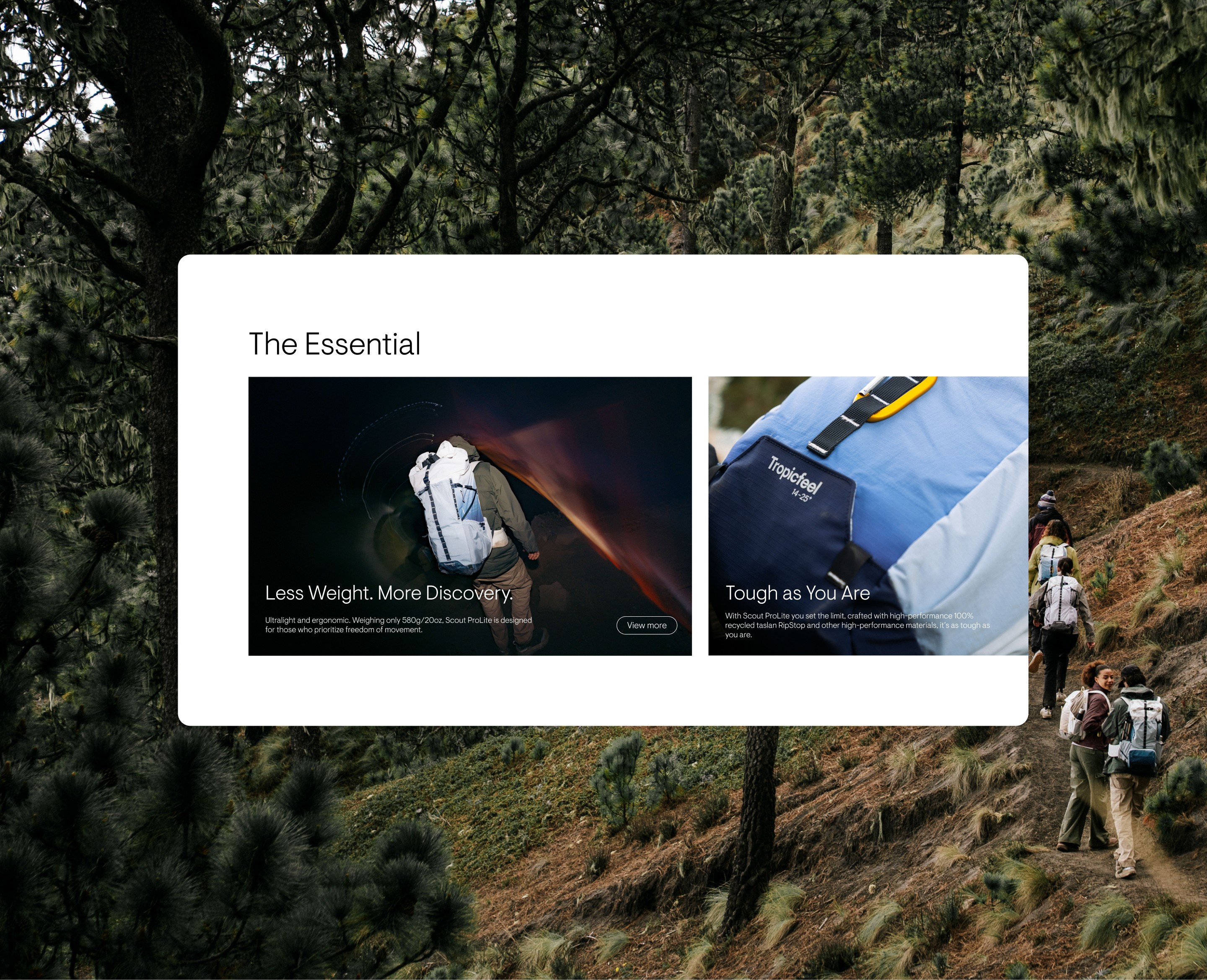
In the first scroll, users can already see: colours, price, key specs (size, litres, cabin size, etc.), reviews, CTA and a mix of clean ecommerce photos plus product-in-use imagery.
Giving accessories the right place in the journey
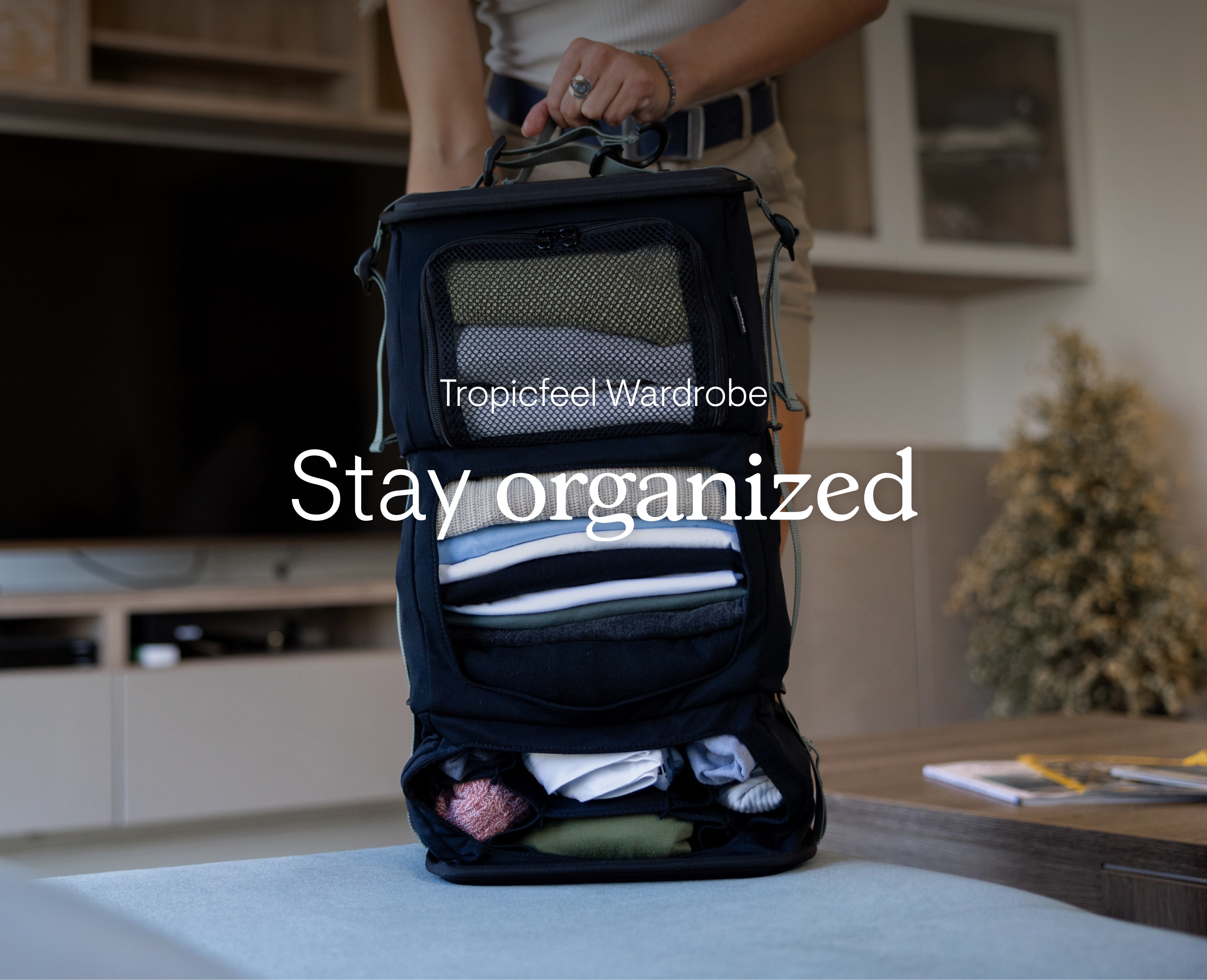
Accessories remain visible on the PDP without stealing focus from the main decision, especially on mobile.
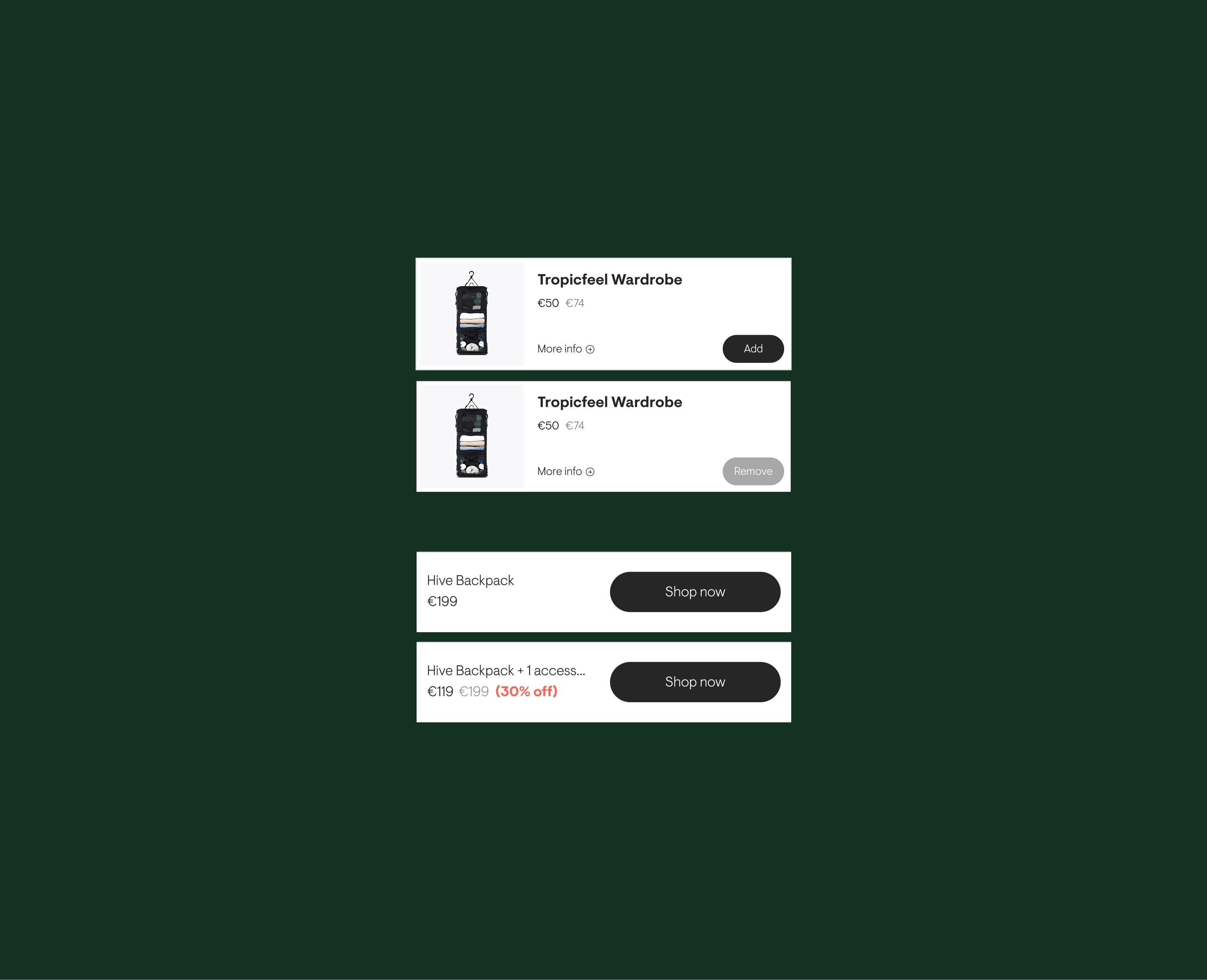
We designed a new cross-selling experience in the cart, where users who didn’t add accessories on the PDP can easily complete their setup with the same discount conditions.
Impact
A/B test on the whole Backpacks category (non-promo period):
🛒 Add to Cart: 5.64% → 6.56% (~+16% relative).
🔁 Conversion rate: 0.77% → 0.81% (~+5% relative).
💶 AOV: 171.02€ → 173.28€ (+1–2%).
META campaigns: more meaningful signals (carts, colour interactions) and better efficiency thanks to a clearer PDP and colour-specific URLs.
Key learnings
A “stable” CvR can be misleading if it depends on increasing discounts and a changing traffic mix.
What worked in the Kickstarter phase is not always what works when the business and the audience mature.
In ecosystem-based categories (Backpacks + accessories), order matters: first help users decide on the core product, then make it easy to complete the setup (PDP + cart).